
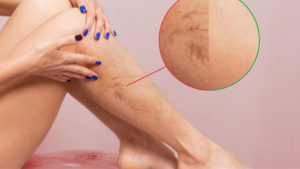
Spider veins are small, web-like veins that appear close to the surface of the skin. They’re especially common on the legs and can range in color from red and purple to blue.
For many people, spider veins are primarily a cosmetic concern. But sometimes, spider veins can be a visible sign of an underlying vein problem.
That doesn’t mean every spider vein indicates venous disease. However, when spider veins appear alongside symptoms such as leg pain, swelling, heaviness, or aching, they may be worth a closer look.
Understanding when spider veins are simply cosmetic — and when they could signal a deeper issue — can help you make informed decisions about your vein health.
What Are Spider Veins?
Spider veins, medically known as telangiectasias, are small blood vessels that become visible near the surface of the skin. They often create branching, web-like, or linear patterns.
They can appear anywhere, but they’re particularly common on the:
- Thighs
- Calves
- Ankles
- Around the knees
Spider veins are different from varicose veins. Varicose veins are larger, swollen, and often raised or twisted, while spider veins tend to be smaller and flatter against the skin.
Both can occur on their own, but they can also be associated with underlying venous disease.
Are Spider Veins a Sign of Poor Circulation?
Not necessarily.
Spider veins are extremely common and can develop for several reasons, including genetics, aging, hormonal changes, pregnancy, and prolonged sitting or standing.
However, spider veins can sometimes occur alongside chronic venous insufficiency (CVI).
Chronic venous insufficiency happens when the valves inside the leg veins don’t work properly. These valves normally help blood travel upward toward the heart. When they become weak or damaged, blood can flow backward and pool in the legs.
Over time, increased pressure in the veins can contribute to visible veins and other symptoms.
That’s why it’s important to look at the whole picture, rather than assuming spider veins are always purely cosmetic.
5 Signs Your Spider Veins May Need a Closer Look
- Your Legs Ache or Throb
Spider veins themselves don’t always cause symptoms. But if you notice aching, throbbing, or discomfort in your legs along with visible veins, it may be worth discussing with a vein specialist.
Venous discomfort can become more noticeable after standing or sitting for long periods.
If your legs consistently hurt at the end of the day, don’t automatically assume it’s just fatigue.
- Your Legs Feel Heavy or Tired
Do your legs feel like they’ve gotten heavier as the day goes on?
A persistent feeling of heaviness or fatigue can be associated with venous disease. You may notice that your legs feel better after elevating them, walking around, or getting off your feet.
If heavy or tired legs are becoming a regular part of your day, your spider veins may not be the only thing worth paying attention to.
- You Have Swelling
Leg and ankle swelling is an important symptom to watch for.
If you notice swelling that develops or worsens throughout the day — particularly around the ankles or lower legs — it could be related to venous circulation.
You might notice that:
- Your shoes feel tighter in the evening.
- Your socks leave deeper marks around your ankles.
- One or both ankles appear swollen.
- Your legs feel tight or uncomfortable by the end of the day.
Spider veins combined with recurring swelling deserve a professional evaluation.
- You Have Varicose Veins, Too
If spider veins are appearing alongside larger, raised, twisted veins, there may be an underlying venous issue that needs attention.
Varicose veins can be associated with symptoms including:
- Aching
- Heaviness
- Swelling
- Itching
- Burning
- Cramping
Having varicose veins doesn’t automatically mean you have significant vein disease, but symptomatic varicose veins shouldn’t be dismissed as simply a cosmetic issue.
- You’re Experiencing Skin Changes
Changes to the skin around your lower legs can be another sign that venous disease may be progressing.
Watch for:
- Skin discoloration
- Darkening around the ankles
- Itching
- Dry or irritated skin
- Thickened skin
- Changes in skin texture
These symptoms can indicate that there is more happening beneath the surface than visible spider veins alone.
What Causes Spider Veins?
Spider veins can develop for a number of reasons. Some common risk factors include:
Genetics
If your parents or other close family members have spider or varicose veins, you may be more likely to develop them yourself.
Aging
As we age, the veins and their valves can become less efficient. This can increase the likelihood of developing visible veins.
Hormonal Changes
Hormonal fluctuations can influence vein health. Spider veins may become more noticeable during pregnancy or other periods of hormonal change.
Prolonged Sitting or Standing
Spending hours sitting or standing can place additional stress on the veins in your legs. This is particularly relevant for people whose jobs require them to remain in one position for extended periods.
Pregnancy
During pregnancy, increased blood volume, hormonal changes, and pressure from the growing uterus can all affect the veins in the legs.
When Are Spider Veins Just Cosmetic?
If you have small spider veins without pain, swelling, heaviness, skin changes, or other symptoms, they may simply be a cosmetic concern.
Some people choose to treat spider veins because they don’t like their appearance — particularly when wearing shorts, skirts, or swimsuits.
That’s completely understandable.
You don’t have to wait until spider veins become painful to talk to a vein specialist.
If you’re interested in treatment for cosmetic reasons, a vein specialist can help determine which options may be appropriate for you.
When Should You See a Vein Specialist?
Consider scheduling an evaluation if your spider veins are accompanied by symptoms such as:
- Persistent leg pain
- Aching or throbbing
- Leg heaviness
- Swelling
- Cramping
- Itching or burning
- Varicose veins
- Skin discoloration
- Slow-healing wounds
A vein specialist can evaluate your symptoms and determine whether there may be an underlying venous condition.
Can Spider Veins Be Treated?
Yes. Treatment for spider veins depends on several factors, including the size and location of the veins, your symptoms, and whether there is an underlying vein condition.
Common treatments may include sclerotherapy, which involves injecting a solution into the affected vein so the body can gradually absorb it.
However, treating the visible spider veins without addressing an underlying venous problem — when one exists — may not provide the results you’re looking for.
That’s why an evaluation can be an important first step.
Don’t Just Look at the Veins You Can See
One of the most important things to remember about spider veins is that what you see on the surface doesn’t always tell the whole story.
A few small spider veins may be nothing more than a cosmetic concern. But if they’re accompanied by swelling, aching, heaviness, varicose veins, or skin changes, they could be a clue that your veins need a closer look.
Your vein health is about more than appearance.
If you’re concerned about spider veins or experiencing symptoms in your legs, McWilliams Vein Center can help you understand what’s happening beneath the surface and determine whether an evaluation is right for you.
You shouldn’t have to guess whether your spider veins are just cosmetic or a sign of something more.
Frequently Asked Questions About Spider Veins
Are spider veins a sign of venous insufficiency?
Not always. Spider veins are common and can develop due to genetics, aging, hormonal changes, pregnancy, and other factors. However, they can sometimes occur alongside chronic venous insufficiency, particularly when other symptoms such as swelling, aching, or heaviness are present.
Can spider veins cause leg pain?
Spider veins themselves don’t always cause symptoms. If you’re experiencing significant leg pain, aching, heaviness, or swelling along with spider veins, it’s worth having your veins evaluated.
Are spider veins and varicose veins the same thing?
No. Spider veins are small blood vessels that typically appear close to the surface of the skin. Varicose veins are larger, swollen, and often raised or twisted. Both can occur independently or alongside underlying venous disease.
Do spider veins get worse over time?
Spider veins may become more noticeable or additional veins may develop over time. Factors such as aging, genetics, hormonal changes, and underlying venous disease can influence their progression.
Can you get rid of spider veins?
Several treatments are available for spider veins, depending on their size, location, and underlying cause. A vein specialist can help determine which treatment may be appropriate for you.
Should I see a doctor about my spider veins?
If your spider veins are accompanied by leg swelling, aching, heaviness, cramping, skin changes, or varicose veins, consider scheduling an evaluation. Even when spider veins are primarily cosmetic, a consultation can help you understand your treatment options.